Over A Quarter Of BMW, Mini, And Rolls-Royce Models Sold In Q3 Had A Plug

BMW Group’s third-quarter EV sales reached 20% globally.
After throwing plug-in hybrids into the mix, the percentage reaches 27.4%.
Europe leads the way, with nearly 35% of cars sold in Q3 being EVs.

The BMW Group, which operates the BMW, Mini, and Rolls-Royce car brands, saw 20% of its global vehicle sales in the third quarter represented by all-electric models. Adding plug-in hybrids increases the electrified models’ share to 27.4%, the company said in its latest earnings report.

From the beginning of the year through September, EVs have accounted for 18.4% of the three automakers’ total sales worldwide, with PHEVs raising the figure to 26.1%.

BMW Group Q3 2026 global sales

Despite the promising numbers, the automotive group clearly has a regionalization problem on its hands. Europe is leading the way by a wide margin, with 34.7% of sales represented by EVs and 46.9% by all electrified models.

Meanwhile, over in the United States, just 4.7% of BMW, Mini, and Rolls-Royce models sold were EVs. That’s a huge difference, and it puts the U.S. at the bottom of the BMW Group’s list for electrification. By comparison, Chinese EV sales amounted to 6.5%, while the Asia-Pacific, Eastern Europe, Middle East, and Africa regions totaled 18% EV sales.

The only thing that saves the day for the company’s electrified lineup in the U.S. is plug-in hybrids, which, together with EVs, had an 11.4% share in the third quarter. It’s also worth noting that the new iX3 and i3 models are just starting to trickle down to American dealers, and the U.S. also doesn’t get the electric iX2 and iX2 that Europeans have access to. The updated i7 is also on its way, but that has always been a low-volume car that never made a meaningful impact on the company’s sales reports.

What’s more, even though one in every five BMW Group models was all-electric in Q3, the company’s year-to-date numbers aren’t so promising. Globally, the group sold 314,552 EVs and 131,653 PHEVs from January through September, a 5.1% decrease compared to the same period last year. EVs saw a 2.7% drop, while PHEV sales declined 10.3%.

The only positive number in the company’s electrification Excel sheets has to do with how many EVs were sold in comparison to everything else in the portfolio. In the first three quarters of 2026, the share of EV sales within the BMW Group reached 18.4%, up from last year’s 18%.

Things should improve once the iX3 and i3 are widely available everywhere in the world, but they’re not guaranteed to be a success in the U.S., where policy whiplash has severely slowed the adoption of all-electric vehicles.

How Far Can Your EV Go After It Says It’s Empty?

All 15 EVs kept going after the dash showed empty. They averaged another 10 miles (16 km).
The Leapmotor B10 went farthest at 19.9 miles (32 km), followed by the Tesla Model Y at 19.3 miles (31 km). The Xpeng P7+ stopped after just 0.6 miles (1 km).
A car can show 0% charge while it still predicts some range; 0% and zero miles don’t always coincide.

What do you do when your EV’s range prediction shows zero and the nearest charger is still a few miles away? Will you make it? In a Tesla Model Y Long Range, you’d pull in with miles to spare, while in an Xpeng P7+, you’d have been on the phone with roadside assistance, even if the Xpeng goes farther on a full charge.

That’s one of the more revealing findings from AUTOBEST’s 2026 ECOBEST Challenge. All 15 EVs that took part in the group test kept moving after their dashboards showed empty, averaging 10 miles (16 km) before they stopped. The Leapmotor B10 led with 19.9 miles (32 km), about a mile ahead of the Model Y. At the other end, the Xpeng barely managed 0.6 miles.

How They Ran The Cars Down

Car journalists drove these production-spec EVs in convoy near Milan, Italy, on a set route containing a mix of city streets, country roads and highways. A lead car set the pace, and drivers traded cars every 19 miles (30 km) to level out potential differences in driving style.

Only the driver was aboard each car; all vehicles were set to their standard (not Eco) mode, with climate control on and tires set to the recommended pressures. Temperatures ranged from 68–77°F (20–25°C).

The final stretch took place at Quattroruote’s Vairano proving ground. When a car’s dashboard showed either zero remaining range or 0% battery charge, its driver kept going until the car could no longer move under its own power. They measured the distance between those two points to see how far each EV could still go.

They used a Zeekr 7GT as a support vehicle to quickly reach drivers whose EVs had stopped. Using its vehicle-to-load (V2L) function, it drew electricity from its own battery pack to get the other vehicles moving again, eliminating the need for a dedicated EV road assistance van.

What ‘Empty’ Actually Means

When your EV says it’s empty, it means you’ve used up the range the car promised you. You may still have enough energy to drive a little farther, since all EVs have a buffer. As the state of charge goes down, the voltage in the battery cells also drops. Before it goes too low, which can damage the cells, the car cuts power to the motor.

So, even when an EV shows 0% and can’t move, some charge remains in the pack—the car won’t let it go completely flat.

Zero percent is the car’s estimate of its remaining usable charge. The range estimate approximates how far that energy will take you. Interestingly, those numbers don’t necessarily have to coincide; they can hit zero at different times. For instance, in one range test, the Tesla Model 3 still showed 2 miles (3.2 km) of range when the state of charge dropped to 0%. It went another 31 miles (50 km) after that point.

Hyundai Is Recalling Nearly 30,000 Kona EVs Because Their Airbags May Not Deploy

Nearly 30,000 Hyundai Kona EVs in the U.S. are being recalled for a potential airbag fault.
The affected vehicles were built in South Korea between 2018 and 2023.
A software update fixes the problem, but a visit to the dealer is needed.

Hyundai is recalling nearly 30,000 first-generation Kona Electric crossovers in the United States because their airbags and seatbelt pretensioners may not work as intended in the event of an accident.

All affected vehicles, 29,058 in total, were built in South Korea between August 28, 2018, and July 26, 2023, representing model years 2019 through 2023. The problem also affects nearly 9,000 Hyundai Veloster N gas-powered hatchbacks sold here between 2019 and 2022.

2023 Hyundai Kona Electric

The Airbag Control Unit (ACU) is the culprit here. According to the recall report published by the National Highway Traffic Safety Administration (NHTSA), data that needs to be written to the ACU’s memory may become corrupted during certain driving conditions, causing the airbag malfunction light (MIL) to pop up on the instrument cluster and the airbag system to deactivate.

Without a working system, the airbags will not deploy during a crash, which increases the risk of injury to the driver and passengers.

Hyundai said that the ACU data may become corrupted if a system reboot or a power interruption occurs while the control unit is writing data to its internal memory. The company’s North America office opened a new investigation back in 2024, after the number of airbag warning light warranty claims went up.

The automaker worked with ZF, the supplier that made the airbag control units, to replicate the problem on other vehicles, but couldn’t. However, a fault was induced during bench testing, and a solution was found.

To fix the problem, owners of affected vehicles need to book an appointment with a Hyundai service center, where technicians will update the ACU software for free. In other words, it’s not a hardware fix, but a software fix. According to Hyundai, the new software rolls back to the last known valid data if the transfer is interrupted for one of the reasons described above.

The maker of the Kona EV said that it’s aware of 331 individual incidents related to the ACU issue that affects the electric crossover and gas-powered hot hatch. The car manufacturer is not aware of any crashes, fires, or injuries associated with the ACU data corruption problem in the U.S.

Winter Storm Coming – Prepare Now for Major Snow and Ice

Weather alerts are flashing coast-to-coast. With heavy snowfall, plummeting temperatures, and “black ice” on the horizon, the margin for error on the road has disappeared. If you haven’t winterized your vehicle yet, today is your deadline.

1. The “Big Three” Winter Checks

Before the first flake falls, verify these three critical components:

The Battery: Cold weather is the #1 battery killer. If your battery is over three years old, it may lack the “Cold Cranking Amps” needed to start in freezing temps.

Tires & Pressure: Cold air causes tire pressure to drop. Ensure you have adequate tread depth and correct PSI to maintain grip on slick surfaces.

Visibility: Replace streaking wiper blades and top off your winter-grade fluid. If you can’t see, you can’t drive.

2. Pack Your “Dig-Out” & Survival Kits

Don’t leave your safety to chance. If you get stuck, you need more than just a cell phone.

For the Car: A small shovel, ice scraper, jumper cables, and traction aids (like sand or cat litter).

For You: Heavy blankets, extra gloves, a flashlight with fresh batteries, water, and non-perishable snacks.

3. Master the Ice

When the roads get treacherous, remember the golden rule: Smooth is safe. Avoid sudden braking or sharp turns. If you start to slide, take your foot off the gas and steer in the direction you want to go. Increase your following distance to at least 8–10 seconds—stopping on ice takes significantly longer than on dry pavement.

Toyota Quietly Gave The 2027 Toyota RAV4 PHEV A Big Upgrade

You may not need the gas engine on the 2027 Toyota RAV4 Plug-in Hybrid all that much.
It gets a native NACS port now located near the driver’s side door.
The RAV4 is among a handful of plug-in hybrids with fast-charging capability.

Toyota has quietly upgraded the sixth-generation RAV4 Plug-in Hybrid. All trims of the model year 2027 RAV4 PHEV now get a Tesla-style North American Charging Standard (NACS) port straight from the factory—plus fast-charging capability.

2027 Toyota RAV4 PHEV Fast-Charging Upgrades

That’s a pretty big deal for a few key reasons. When the RAV4 PHEV launched last year, it arrived with a CCS charging port at a time when all new EVs had started transitioning to native NACS ports. At the time, only the PHEV XSE and Woodland trims could fast charge, meaning you had to pay at least a $4,000 premium for the capability.

Now that fast-charging capability expands to the full PHEV lineup, all the way down to the entry SE model, which costs $42,100. The same goes for the top-trim GR Sport. Owners can now simply drive the 2027 RAV4 PHEV to Tesla Superchargers or any of the new stations equipped with NACS cables. It will charge at maximum rate of 50 kilowatts, enough to go from 10-80% in just 30 minutes.

Moreover, not many PHEVs get fast-charging capability, let alone native NACS ports. The RAV4 PHEV is now the first and only major PHEV in the U.S. to transition to the NACS port, joining the wave of new fully electric models doing the same.

Some other notable PHEVs that have fast-charging capability include the Mercedes GLC 350e which gets a CCS port and the Mitsubishi Outlander PHEV which gets the outdated CHAdeMO connector.

2027 Toyota RAV4 PHEV Home Charging Capability

If owners are used to plugging-in at home, they can continue to do so. The RAV4 PHEV gets an onboard AC charger for Level 1 and Level 2 charging. And home charging can now be faster as well, with GR Sport and SE trims getting 11 kW AC charging, up from 7 kW before. The XSE and Woodland were already rated for 11 kW since last year.

And the one final notable upgrade is that the charging port is now located near the driver’s side door—it was previously at the passenger’s side. This could be useful depending on how you park at home and where you live, since there’s no industry standard for the charging port location.

The newer V4 Tesla Superchargers, as well as Ionna, Walmart, and pretty much every major new station have long cables with well-engineered retraction systems, so the location of the port shouldn’t be a problem. The older V3 Tesla Superchargers will be a challenge since they were designed for rear left ports.

The RAV4 PHEV gets up to 52 miles of EPA range from its 22.7 kilowatt-hour lithium-ion battery. If you regularly plug it in, you can cover your everyday driving needs using battery power alone and use the gas engine for longer trips. And now, it looks like that charging experience just got a little better.

What to Look For When Buying New Tires – Many Tips

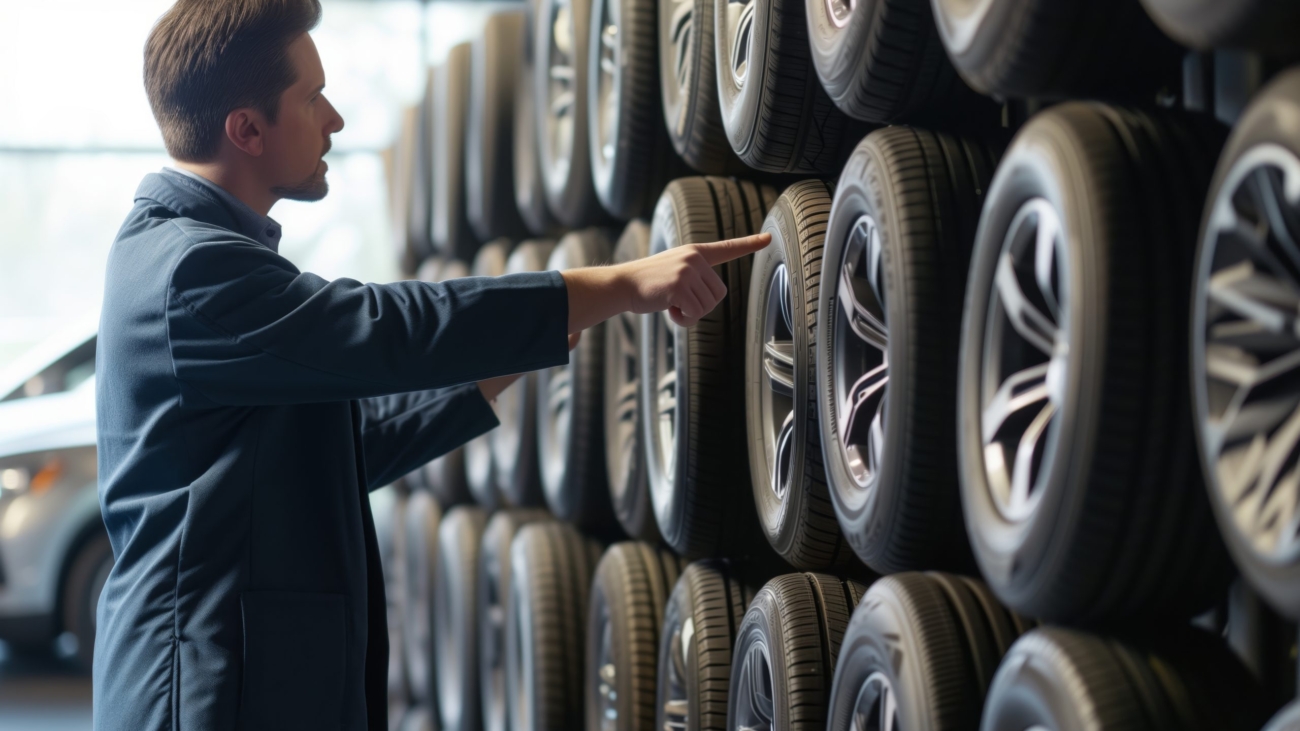
Buying new tires should be a simple task: roll into your shop of choice, let the experts do their work, and drive away with confidence. Unfortunately, it doesn’t always go that smoothly. There are some cases of tire shops installing the wrong type of tire for a specific vehicle. The lesson? Don’t leave all the decision-making to the professionals. Educate yourself instead.

Here are the essential factors you should consider when purchasing new tires.

1. The Tread Wear Indicator

Knowing when to replace your tires is the first step. Tires are replaced for many reasons, including preparing for winter or retiring a tire whose structural integrity has been compromised by age. However, the most common reason is simple wear.

In most states, tires are legally considered unsafe when they are worn down to 2/32” of remaining tread. One of the easiest ways to check this is to inspect the tread wear indicator bars molded into the tire’s grooves. When these bars become flush with the surrounding tread, the tire has reached its limit and must be replaced immediately.

2. Understanding Tire Size

Installing the wrong tire size can be both damaging to your vehicle and dangerous. Tires that are too tall can rub against the struts or wheel wells, while tires that are too small can create stability and handling issues.

Always check the tire size specified in your owner’s manual or on the placard inside the driver-side door jam. While there is occasionally a small amount of “wiggle room” for going slightly wider or taller, you should never deviate from manufacturer recommendations without expert consultation. Additionally, never mix different tire sizes or brands on the same axle.

3. Consider Your Driving Habits

Not all tires are created equal. High-performance cars often require tires with specific speed ratings. These are manufactured with more “flex” in the sidewall to provide better grip and heat dissipation.

Check your manual for the recommended speed rating, but also consider your environment. If you live in an area with heavy rain or snow, look for “All-Season” or dedicated “Winter” tires. If you primarily drive on highways in a dry climate, a “Grand Touring” tire might provide a quieter, more comfortable ride.

4. Tire Warranty and Road Hazard Protection

The warranty can directly impact your long-term costs. Tires typically come with a tread-life warranty ranging from 30,000 to 100,000 miles. Keep in mind that high-performance tires wear out faster and may offer shorter warranties (or none at all).

Beyond the manufacturer’s warranty, many shops offer Road Hazard Protection. This covers you in the event of a blowout or an unrepairable flat caused by potholes or debris. Before you buy, ensure you understand what the shop’s protection plan covers.

Additional Tips for the Savvy Buyer

Check the “Birth Date”: Tires have a four-digit DOT code on the sidewall representing the week and year they were made (e.g., “1224” means the 12th week of 2024). Rubber degrades over time, even if it isn’t being used. Avoid buying “new” tires that have been sitting on a shelf for more than two or three years.
The Spare Tire: When replacing a full set, check the condition and age of your spare. If it’s over six years old, it may be time to replace it as well, even if it has never touched the ground.
Alignment and Balancing: Always insist on a wheel alignment when buying a new set of tires. If your alignment is off, your brand-new tires will wear unevenly and wear out significantly faster.
Fuel Efficiency (Rolling Resistance): Some tires are designed to be “Low Rolling Resistance.” These can actually improve your gas mileage by reducing the energy lost as heat when the tire rolls.


photo_2026-11-10_17-53-13

BYD’s Ultra-Luxury Electric Sedan Can Do Tank Turns And Go Over 600 Miles

The Yangwang Altior is BYD’s answer to the Rolls-Royce Ghost and Mercedes-Maybach S-Class.
Unlike its British and German rivals, though, the Altior is electric, with a quad-motor setup that reportedly makes over 1,000 hp.
Yangwang’s flagship sedan is properly luxurious, with gold and gem-cut elements.

China’s BYD is gunning for supremacy in every possible automotive segment that has traditionally been the stomping ground of European and American brands. After setting the record straight in the hypercar world with the Yangwang U9 Xtreme, the Chinese behemoth is now going after Rolls-Royce and Mercedes-Maybach with the new Yangwang Altior.

The Altior, which debuted this weekend in Abu Dhabi, is a massive luxury four-door sedan that goes after the Rolls-Royce Ghost with a long list of features that only the world’s richest people would see as must-haves. It also one-ups its European rivals with something that would probably be labeled as “brash” by some suit-wearing executives.

First up, the Yangwang Altior is completely silent, and not because the Chinese have come up with some revolutionary way of making a massive V-12 engine less chatty than Rolls-Royce, but because it’s powered by an electric powertrain. No fewer than four electric motors and a second-generation Blade battery provide motivation without having to muffle the sound of gasoline exploding under the hood. A fancy suspension, which automatically adjusts settings for the best ride based on information received from a front-facing camera, is also part of the equation.

Thanks to the four individual motors, one at each corner of the car, the Altior can do something that no German or British luxury car has ever been able to: turn on a dime, just like a tank. The Altior also boasts an emergency flotation function that’s meant to help the driver get out of the car if it somehow ends up in water. It’s not exactly something that comes in handy every day, but for the paranoid mogul who thinks about the latest improvements to their doomsday bunker on a daily basis, it may be the one thing missing from every other luxury barge.

Up front, the massive grille that’s reminiscent of Rolls-Royce’s metal nose features individually polished elements and 12 lighting elements that rotate and illuminate one after another as the owner approaches. No fewer than 137 gem-cut elements and a front emblem that’s reportedly 24-karat gold complete the grille.

Open the doors, and you’re greeted with quite a bit of theatre. The front doors open up to 80 degrees, while the rear coach doors can open up to 90 degrees to make ingress and egress as easy as possible. And because imitation is the sincerest form of flattery, custom-made umbrellas are hidden inside the doors, just like on a Rolls-Royce.

While the exterior of the Altior is something that would look at home in Rolls-Royce’s factory parking, the interior reveals its Chinese roots immediately. A huge screen takes up the whole dashboard—a feature that’s all the rage in China, but might seem outdated in a few years. By comparison, more traditional luxury carmakers have usually refrained from plastering screens everywhere, making the interior design a little more timeless.

Apart from the huge screen, though, the Altior can hold its own against the European heavyweights. Plenty of metal switches are used throughout the cabin, and the rear passengers get to enjoy a pair of massaging zero-gravity chairs that can recline and have raising leg rests. Dozens of decorative pieces are dotted around the interior, complemented by traditional embroidery with silk threads, thick pure-wool floor mats, and natural wood trim.

BYD says the Yangwang Altior provides 13.9 inches (354 millimeters) of knee room and 47.6 in (1,209 mm) of legroom. A dedicated relaxation mode makes several pieces fall into place: the sun blinds rise, the seats recline, the ambient lighting softens, and the leg rests rise—all at the press of a button.

When entertainment is needed, a huge 21.4-inch overhead screen swivels down from the headliner, and a 39-speaker audio system handles the sound. A pair of refrigerators keeps drinks cool or warm, with the rear unit holding 1.5 gallons (5.5 liters).

Range-wise, the Altior can deliver more than 621 miles (1,000 kilometers) on a full charge, according to BYD, though that’s based on the rather lenient CLTC rating. Still, recharging from 10% to 70% should take just five minutes on the megawatt-capable Flash Chargers.

The Yangwang Altior carries a pre-sale price of 2.08 million yuan, or about $311,000, with deliveries scheduled to start in the second quarter of 2027. BYD’s Yangwang brand is currently selling cars in the United Arab Emirates and China, but Europe is next, with the first stores expected to go live in the United Kingdom next year.

Cadillac Is Bringing GM’s Super Cruise Hands-Free Driving System To Europe

General Motors is introducing its Super Cruise hands-free driving system in Europe.
Three Cadillac electric crossovers will be the first models to deliver the semi-automated feature.
Based on pre-mapped lidar data, Super Cruise will be available on over 111,000 miles of European roads across 16 countries.

Super Cruise, General Motors’ hands-free driving assistance system, is heading to Europe, where it will be available starting in mid-December on a handful of Cadillac EVs.

The 2025 Optiq, as well as the 2026 Lyriq and Vistiq electric crossovers, will be able to do semi-automated driving on more than 180,000 kilometers (111,000 miles) of compatible roads across 16 European countries beginning at the end of the year. Germany, France, and Switzerland are among the first European countries where the system will go live.

Photo by: Cadillac

Super Cruise, which is already available in the United States, Canada, China, and South Korea, uses pre-mapped roads, real-time cameras, radar sensors, GPS data, and adaptive cruise control to enable hands-free driving. That said, the system is still considered a Level 2 driver assistant, according to the Society of Automotive Engineers, so it doesn’t make the car run autonomously, and the driver still needs to pay attention at all times when driving.

A driver monitoring system makes sure that the person behind the steering wheel is alert and can take control at any time, if needed.

When active, Super Cruise displays a green light bar at the top of the steering wheel. The system keeps the vehicle centered in the lane and maintains an appropriate distance from the car in front, without the driver having to touch the steering wheel or pedals. It can do lane changes, but the driver has to initiate the maneuver by activating the indicator.

The feature can be used on compatible roads, including highways and dual carriageways, at speeds of up to 130 kilometers per hour (81 miles per hour), including in heavy stop-and-go traffic.

Photo by: Cadillac

Cadillac has integrated Google Maps into the navigation map display, which shows roads where Super Cruise can be used and how much of a trip can be driven hands-free. The automaker says the driver assistance feature is designed to make driving more comfortable and convenient—so drivers shouldn’t expect to be able to take a nap while on the road.

“Super Cruise brings together Cadillac’s premium driving experience, connected services and advanced driver assistance technology to make everyday journeys more comfortable,” said Maximilian Wittich, Managing Director, Digital Services and Experiences. “We are excited to bring this hands-free experience to customers in Europe and to offer technology that has been tested and adapted for European roads and requirements.”

GM said it did a lot of performance testing and validation, as well as regional route testing and Europe-specific software tweaks to make Super Cruise compatible with European legislation and driving conditions.

Since debuting in 2017, Super Cruise has delivered over a billion hands-free driving miles, GM said. In North America alone, there are roughly 750,000 Super Cruise-enabled vehicles, but the American auto giant estimates that the number of users will exceed 850,000 by the end of the year.

In the U.S., over 20 GM models are compatible with Super Cruise. The system is included for free for the first three years from the date of first registration. When the free trial ends, owners need to pay for a Super Cruise subscription and a Connected Services plan to keep using hands-free driving.

China’s World-Beating Supercar Just Hit 312 MPH

The Chinese-made Yangwang U9 Xtreme is the first production car in the world to go faster than 500 kph (310 mph).
BYD’s electric hypercar already had several speed records under its belt, and now it has added two more.
The FIA and Guinness World Records made the latest attempt official.

A Chinese EV is officially the fastest production car in the world and the first production car in history to break the 500 kilometers per hour (310 miles per hour) barrier. BYD’s Yangwang U9 Xtreme, a two-door electric hypercar, reached 503.17 kph (312.6 mph) on a public road in Abu Dhabi, United Arab Emirates, on November 1.

As a reminder, the U9 Xtreme was already the world’s fastest car, after it reached 496.22 kph (308.3 mph) back in September 2025, but the Chinese automaker had already set its sights last year on breaking the 500 kph barrier—something that no other production car has ever managed.

The latest and most impressive record happened on a roughly 10-kilometer (6.2-mile) stretch of the E11 road in Abu Dhabi’s Al Dhafra Region, which was closed to public traffic. German racing driver Marc Basseng, the same driver who delivered the previous record, was behind the wheel and needed four runs over the course of two days to set the new record.

The first two runs happened on October 31, when the maximum speed was 490 kph (304.4 mph). Engineers made adjustments to the vehicle’s aerodynamics, suspension settings, and tire pressures to improve stability and performance. Then, on the last run of the second day, the Racelogic recorder made the 503.17 kph (312.6 mph) run official.

According to Guinness World Records, the Yangwang U9 Xtreme now holds the records for the highest speed achieved by a production car and an electric production car in a single-direction run. The FIA also confirmed the achievement on its website.

That last part is particularly interesting because the usual way of breaking records involves two separate runs in opposite directions to account for elevation change, wind speed, and any potential breakdown. BYD went for a single run in a single direction, which could make companies like Rimac, Bugatti, and Koenigsegg raise an eyebrow and challenge BYD’s result.

Nevertheless, going over 500 kph in a production car—albeit a limited-production model—is immensely impressive, especially considering that it’s an EV. BYD plans to make just 30 units of the U9 Xtreme, which is the most powerful and fastest version of the U9 supercar. Powered by four electric motors totaling 2,977 horsepower, the Xtreme uses a 1,200-volt lithium iron phosphate (LFP) battery pack that can discharge at a 30C rate. A set of semi-slick GitiSport e-GTR2 Pro tires keeps the car on the road and provides stopping power, helped by titanium calipers and carbon-ceramic rotors.